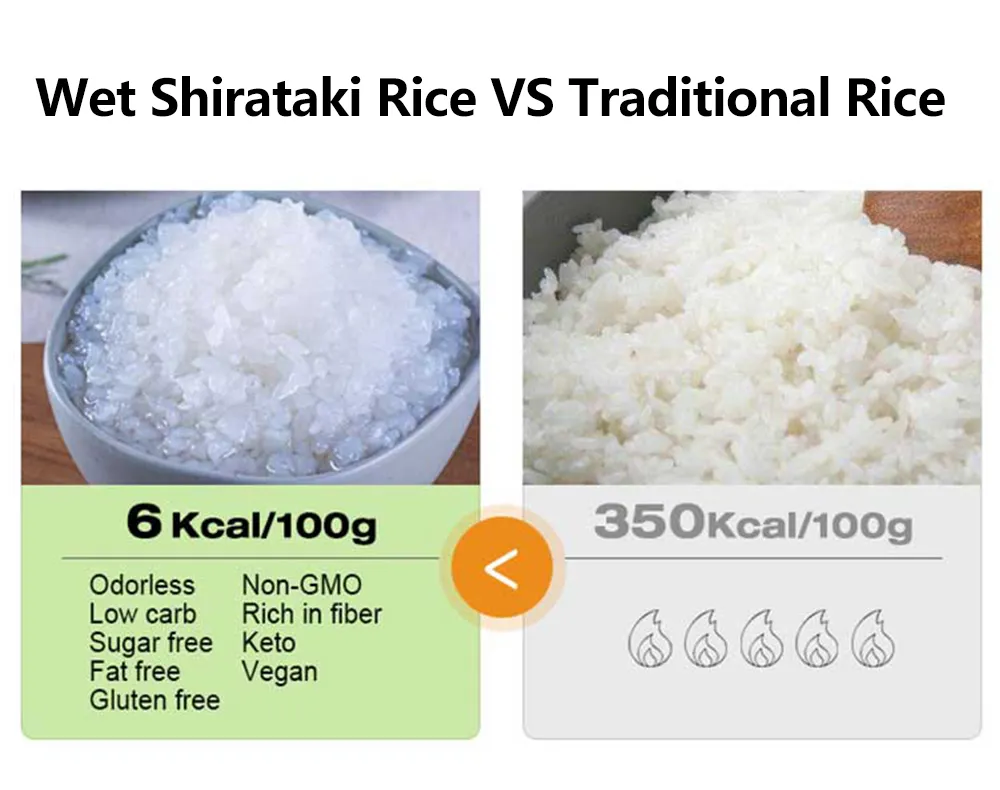
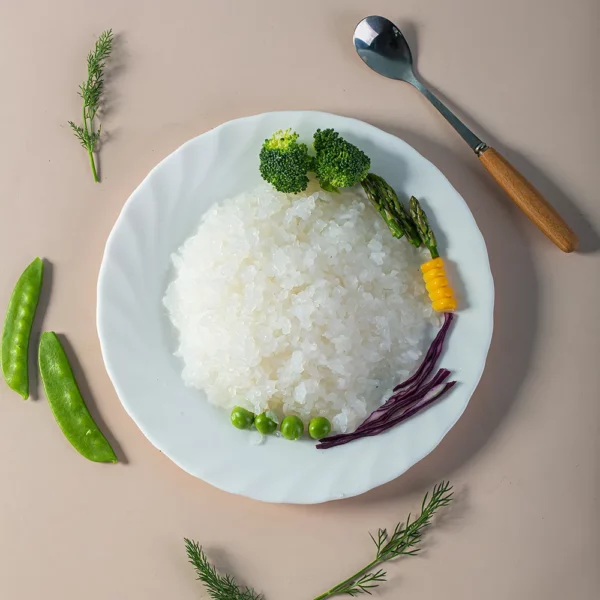
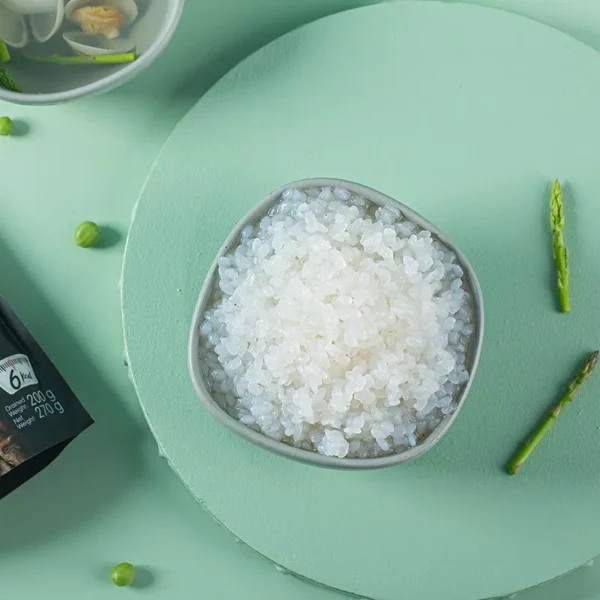
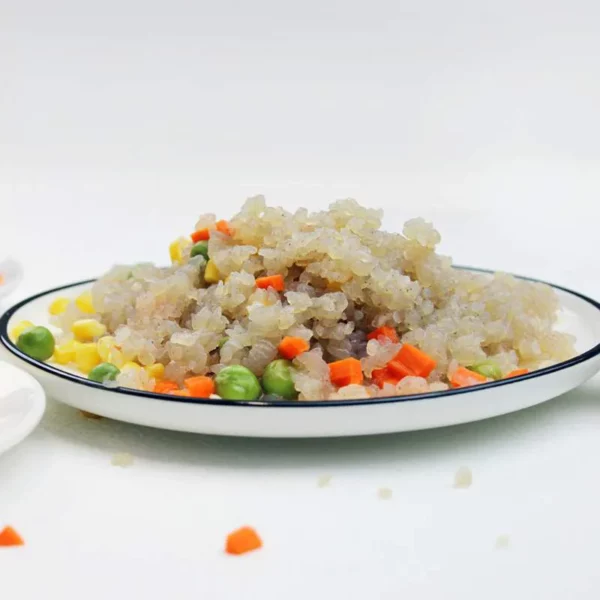
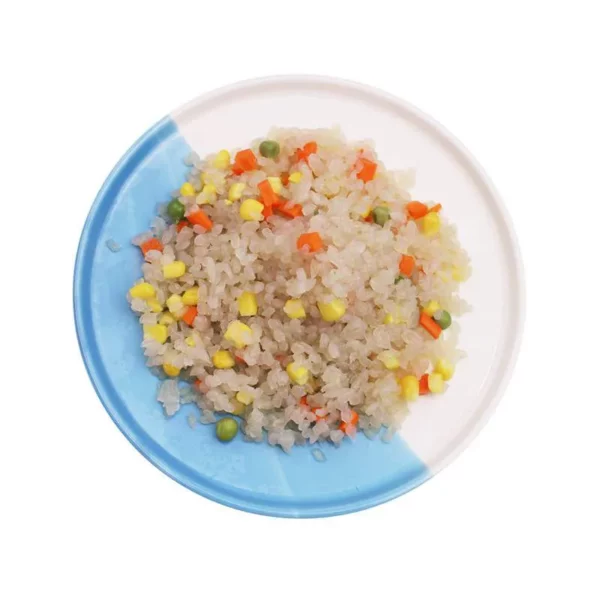
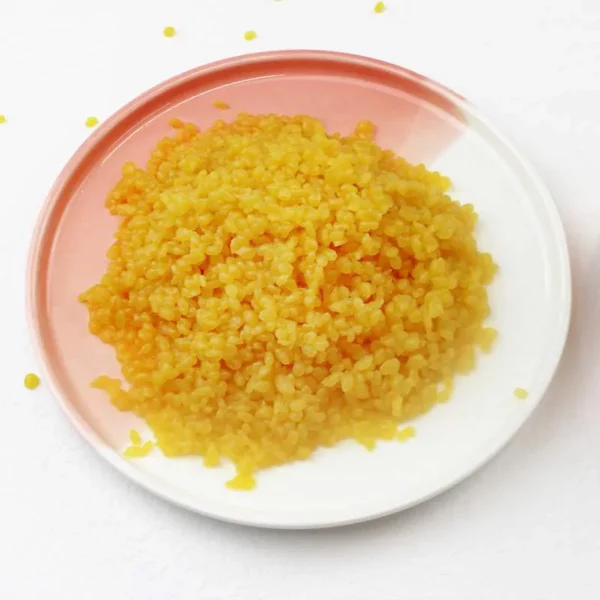
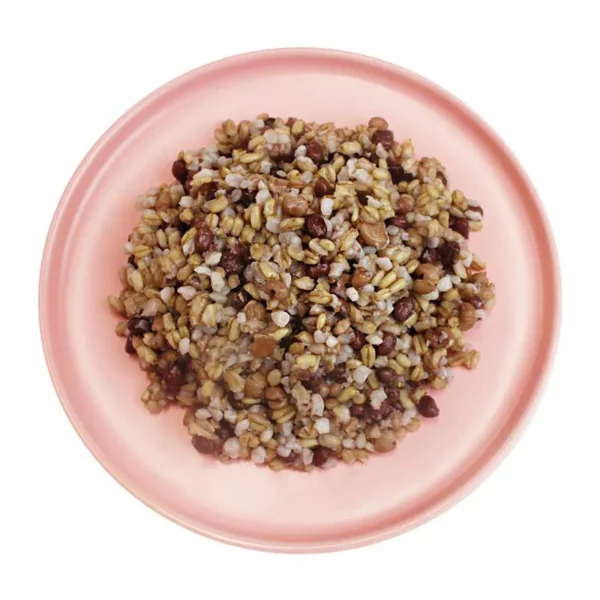
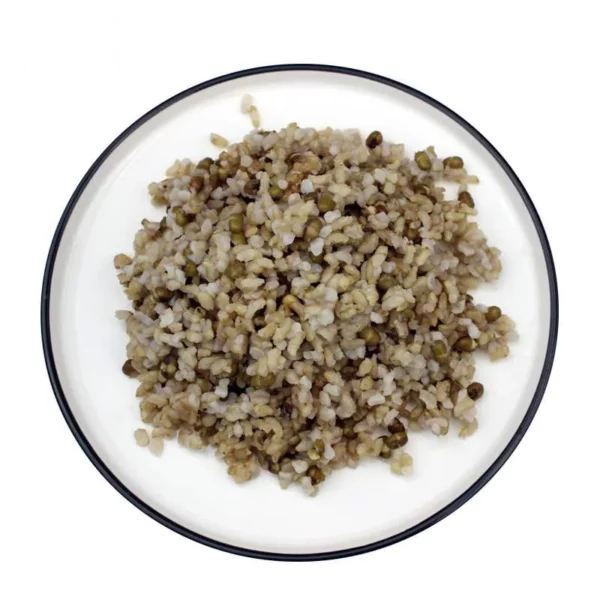
Wet shirataki rice is made from a natural vegetable called konjac root. It is a great diet food containing 6 grams of calories and 2 grams of carbohydrates and contains no sugar, fat, or protein.
Shirataki Konjac Rice is low in calories and carbohydrates, and is very suitable for people who want to lose fat and control their weight. The high fiber content helps increase satiety, making it easier to maintain weight. It is also rich in dietary fiber, which aids in digestion and promotes intestinal health.
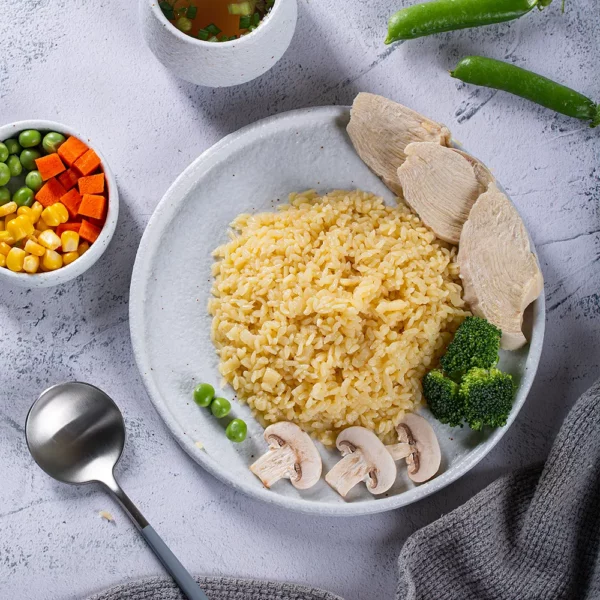
Our Wet Shirataki Rice stands for low-calorie, low-carb, high-fiber, and comes in a variety of flavors, including carrot, oat, seaweed, buckwheat, mung bean, and red bean.
Konjac derived from the magic legend of the east and the ancient wisdom of China. To carry over the mysterious legend thousands of years ago and explore the magical plant konjac, which has been made to be a gourmet delicacy from a poisonous plant. Konjac is the only plant that can provide a large amount of glucomannan among the top ten healthy foods that are recognized by the World Health Organization. With the increasing awareness of people’s healthcare and food safety, the health industry brought by konjac consumption is booming in a new round of “spring”.
FAQs
1. Does shirataki rice actually taste like real rice?
No, not exactly. It lacks the starchy sweetness and the fluffy, absorbent texture of jasmine or basmati rice. On its own, it is flavorless and has a slightly more rubbery, slippery texture (similar to biting into tiny pieces of firm jelly). However, because it is neutral, it takes on the flavor of whatever sauce or seasoning you mix it with.
2. How do I get the "fishy" smell out?
Just like the noodles, wet-packed konjac rice has a distinct ocean-like odor when you first open the bag. This is from the calcium hydroxide water used to preserve it. Sentaiyuan no longer uses calcium hydroxide water to soak konjac rice, so our konjac rice will not have a “fishy” or “earthy” taste.
To fix this: 1. Rinse the rice in a fine-mesh strainer under cold water for 60 seconds. 2. Boil it for 2 minutes (optional but helps). 3. The smell should be completely gone before you add it to your food.
3. How do I cook it so it isn't wet and mushy?
The “Dry Fry” method is even more critical for rice than for noodles.
After rinsing and draining, toss the rice into a dry non-stick skillet (no oil yet).
Cook over medium-high heat for 5 to 10 minutes.
You will hear a “hissing” sound as the steam escapes. Keep stirring until the hissing stops and the rice looks dry and slightly pearly white. This restores a texture closer to distinct grains of rice.
4. Will it give me a stomachache?
It is possible. Shirataki rice is almost 100% soluble fiber (glucomannan). If you eat a large bowl without being used to a high-fiber diet, you may experience significant bloating, gas, or loose stools. It is best to start with a small portion (1/2 cup) mixed with vegetables or protein.
5. Can I mix konjac rice with real rice?
Yes, this is a popular “hack.” Many people mix 50% shirataki rice with 50% jasmine or brown rice. This cuts the calories and carbs of the meal in half while maintaining a texture that feels much more like a “real” bowl of rice than eating shirataki alone.
Sentaiyuan Konjac Food Exhibition
2024-2025, Sentaiyuan has participated in the World Organic Food and Beverage Exhibition.
Thaifex Anuga Asia Bangkok, Thailand 2024,
WOFEX Manila, Philippines 2024,
Singapore EXPO 2024
Malaysia International Food & Beverage Trade Fair (MIFB) 2024,
SIAL INTERFOOD in Jakarta 2024,
SIAL Food Exhibition Paris, France 2024,
BIOFACH 2025 Germany
Anuga 2025 Sentaiyuan
Anuga 2025 Sentaiyuan
Malaysia International Food & Beverage Trade Fair (MIFB) 2024
2024 SIAL Paris Food Exhibition
2024 SIAL Paris Food Exhibition
Philippines WORLD FOOD EXPO
Philippines WORLD FOOD EXPO
Singapore EXPO 2024
Singapore EXPO 2024
2025 PLMA Netherlands Sentaiyuan
2025 PLMA Netherlands Sentaiyuan
2025 PLMA Netherlands Sentaiyuan
2025 FHA Exhibition Sentaiyuan
2025 Sentaiyuan FHA Exhibition
2025 THAIFEX - Anuga Asia Sentaiyuan
Get Your Quote
FIll out the form below and we will cantact you as soon as possible