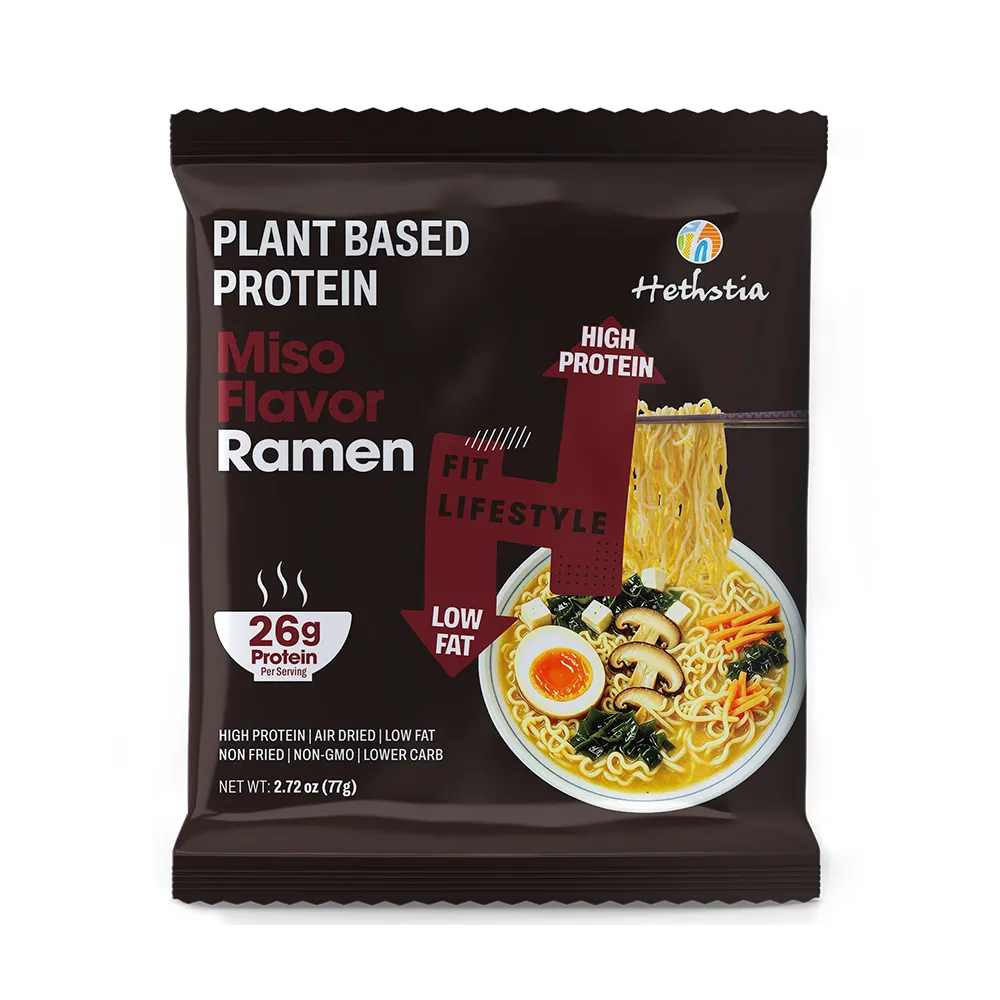
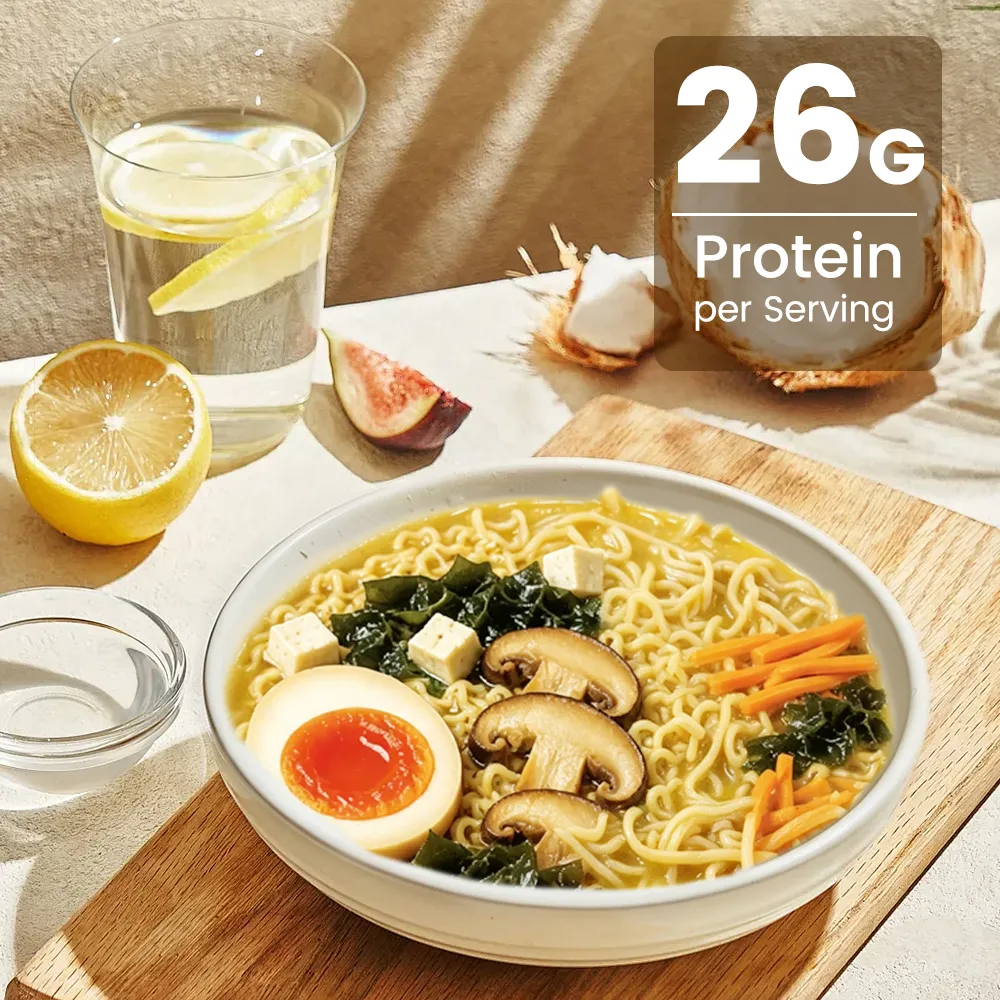
Vegan Miso Ramen Soup Information and Ingredients
Ramen Ingredients
Vital Wheat Gluten, Wheat Flour, Pea Protein, Pea Fiber, Tapioca Starch, Pea Starch, Buckwheat Flour, Konjac Flour, Salt, Sodium Carbonate (Acidity Regulator).
Sauce Packet
Water, Soybean Paste, Soybeans, Sugar, Salt, Wheat Flour, Brewed Vinegar, Yeast Extract, Disodium 5′-Ribonucleotides, Xanthan Gum, Sesame, Miso, Rice, Brewed Soy Sauce, High Fructose Corn Syrup, Modified Food Starch, Glucose Syrup, Garlic.
Vegetables
Freeze-dried Tofu, Dehydrated Wakame, Dehydrated Green Onion.
Allergen Information
Contains: Wheat, Soybeans, Sesame.
Storage
Store at room temperature in a cool, dry place. Keep away from strong light and heat.
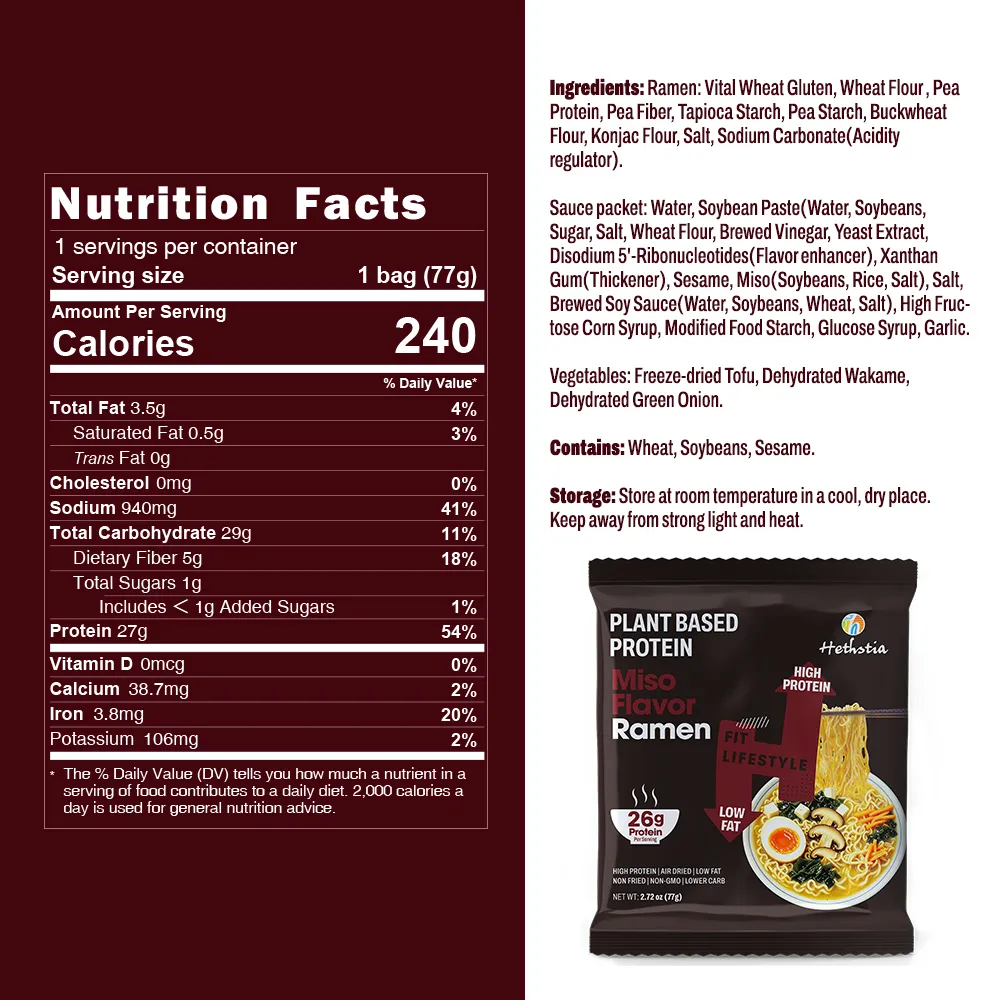
Nutrition Facts
| Nutrition Information |
Per 77g Serving |
| Energy |
240 kcal |
| Protein |
26g |
| Total Fat |
3.5g |
| Total Carbohydrate |
29g |
| Dietary Fiber |
5g |
| Sodium |
940mg |
| Calcium |
38.7mg |
| Iron |
3.8mg |
| Potassium |
106mg |
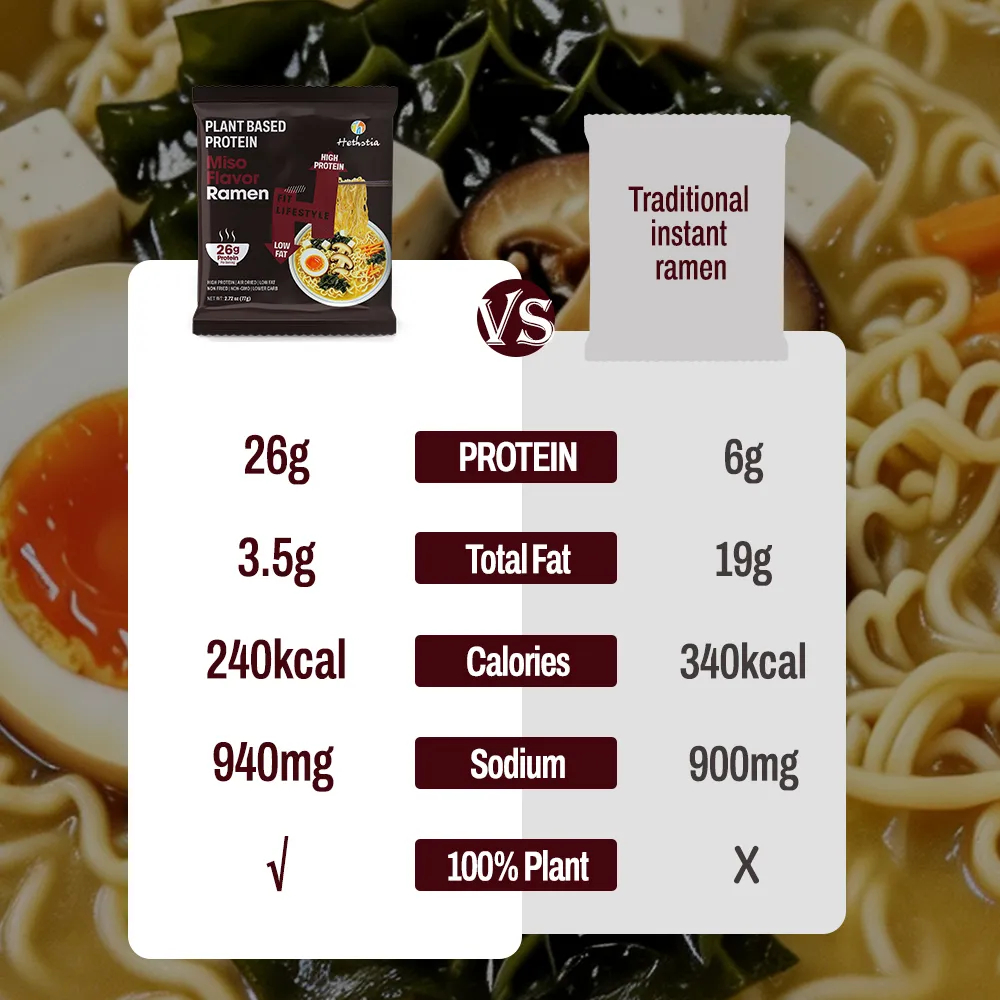
What Makes This Vegan Miso Ramen Soup Different from Standard Instant Ramen
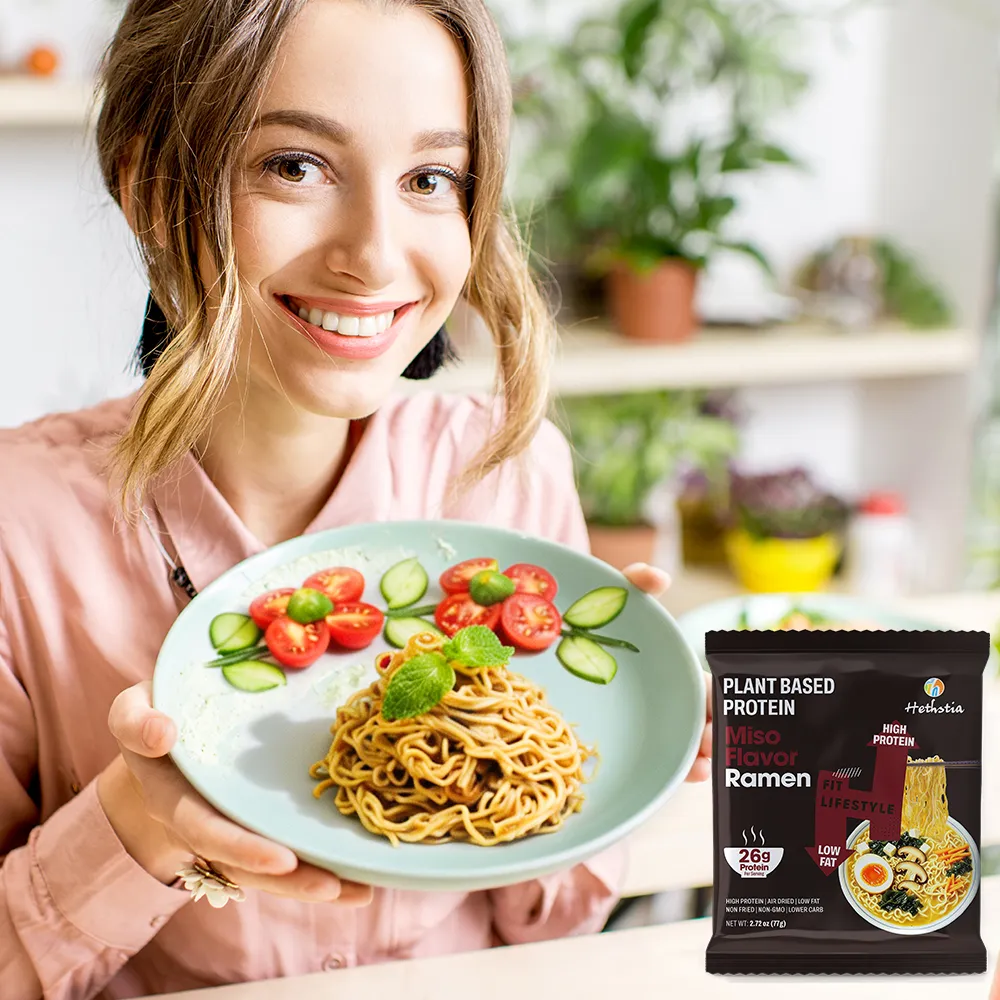
The formulation combines vital wheat gluten and pea protein with pea fiber, pea starch, tapioca starch, buckwheat flour, and konjac flour. This creates a protein-focused noodle base while maintaining the familiar format expected from an instant ramen product.
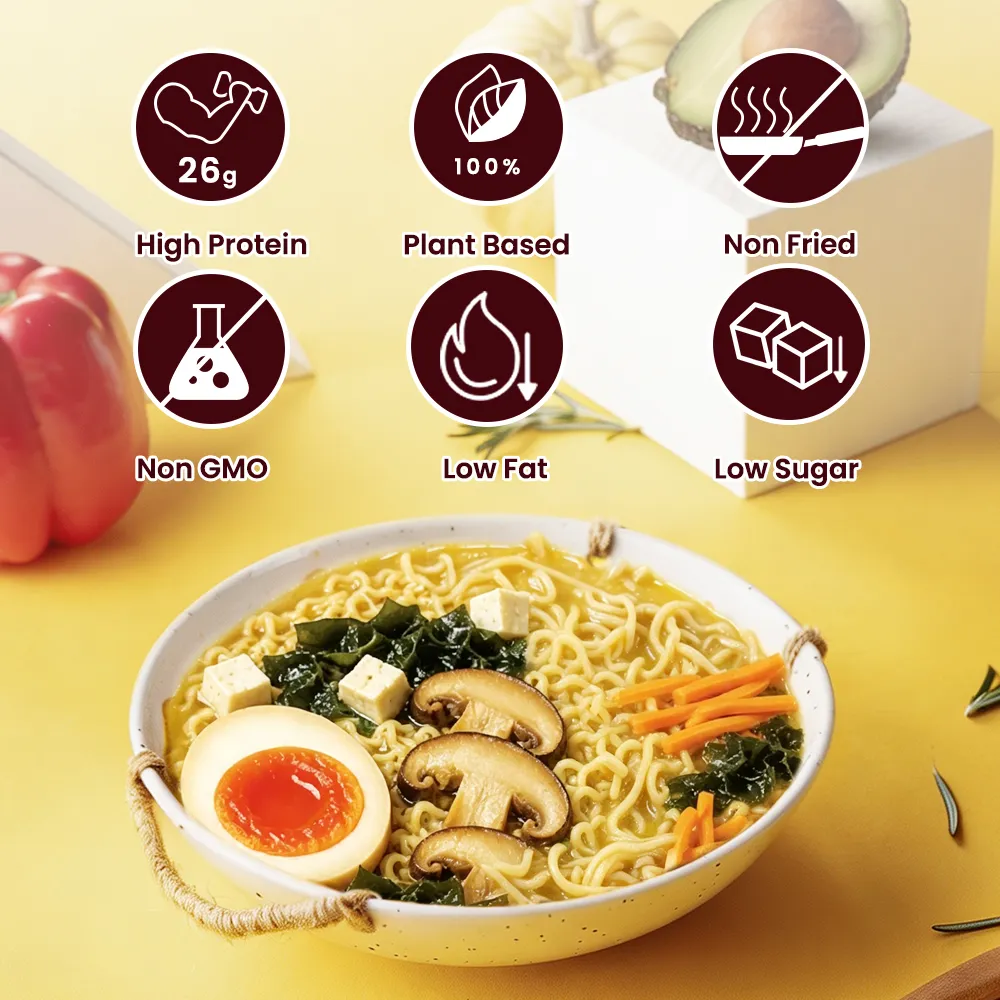
Unlike conventional fried instant noodles, the supplied specification identifies this product as non-fried and air-dried. Each 77g serving provides 26g protein, 5g dietary fiber, 3.5g total fat, and 240 kcal.
The accompanying miso seasoning uses soybean paste, miso, brewed soy sauce, garlic, yeast extract, and other flavor components. Freeze-dried tofu, dehydrated wakame, and green onion are included to provide additional ingredients within the finished bowl.
For procurement teams, the combination of plant-based formulation, protein specification, air-dried processing, and ambient storage provides a clear product profile for vegan instant meal portfolios.
Vegan Miso Ramen Soup Construction for Ambient Food Applications
The noodle structure is based on vital wheat gluten, wheat flour, pea protein, pea fiber, tapioca starch, pea starch, buckwheat flour, and konjac flour. These ingredients provide the dry noodle structure and contribute to the stated protein and fiber specifications.
The miso broth component uses soybean paste and miso together with brewed soy sauce, garlic, yeast extract, and other seasoning ingredients. The formulation also contains sesame within the sauce packet.
Vegetable components include freeze-dried tofu, dehydrated wakame, and dehydrated green onion. These ingredients are designed for rehydration during preparation, allowing the finished product to retain a recognizable ramen presentation after hot-water preparation.
The supplied storage instructions are to keep the product at room temperature in a cool, dry place and to protect it from direct sunlight and heat. Buyers should confirm the final shelf life, packaging barrier specification, carton configuration, and storage validation as part of commercial product approval.
For brands using Vegan Miso Ramen Soup in different regions, the ingredient list and allergen declaration should be reviewed against each destination market before final artwork approval.
Vegan Miso Ramen Soup Installation: Five-Minute Preparation
As a ready-to-prepare food product, Vegan Miso Ramen Soup does not require equipment installation. The main operational requirement is access to boiling water and a suitable serving bowl.
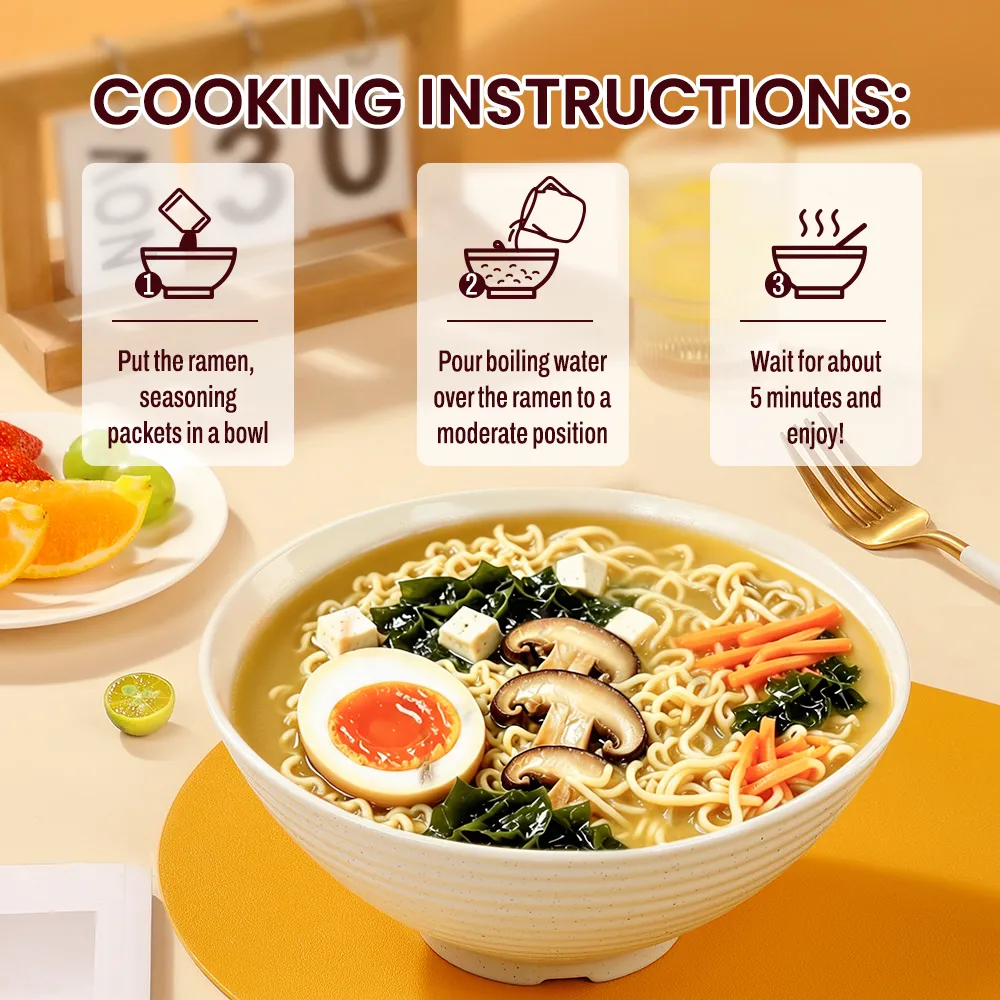
The supplied preparation process consists of three steps:
- Place the ramen and seasoning packets in a bowl.
- Pour boiling water over the ramen to a moderate level.
- Wait approximately five minutes before serving.
This preparation format suits retail convenience products, office meal programs, foodservice operations, hotel pantry services, and e-commerce meal assortments.
For commercial foodservice applications, buyers should validate preparation instructions using the final package format and serving configuration. Regional packaging may also require localized cooking instructions, storage statements, allergen declarations, nutrition presentation, and language requirements.
The product’s ambient storage specification can simplify inventory planning where dry food storage is already available. Final shelf-life and distribution conditions should be confirmed through the supplier’s approved technical documentation.
Request Technical and Commercial Information
A plant-based ramen buyer may need more than flavor and nutrition information when qualifying a supplier. Certification scope, allergen documentation, packaging specifications, shelf-life records, and destination-market labeling requirements should be reviewed before purchase approval.
For samples, specifications, private-label discussions, and commercial quotations, contact [email protected].