Plant-Based Protein-Packed Ramen | Black Garlic Flavor Ramen
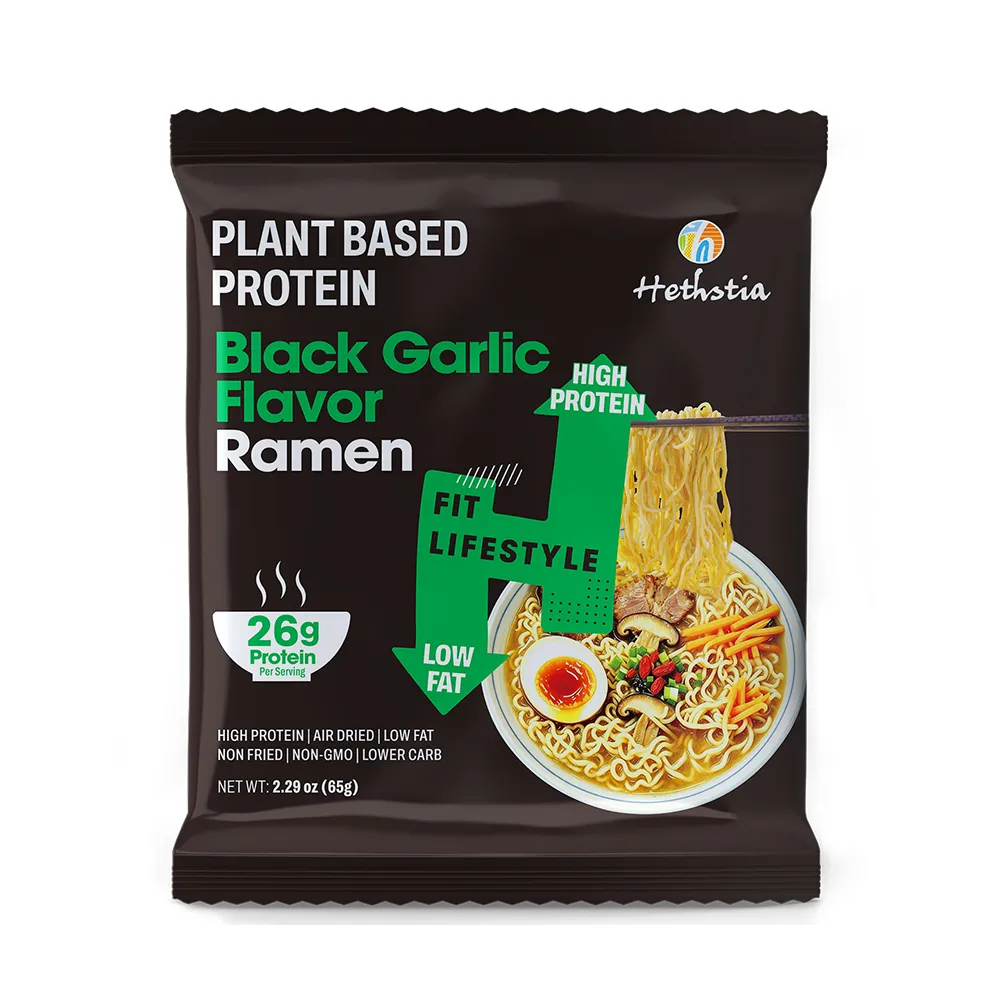
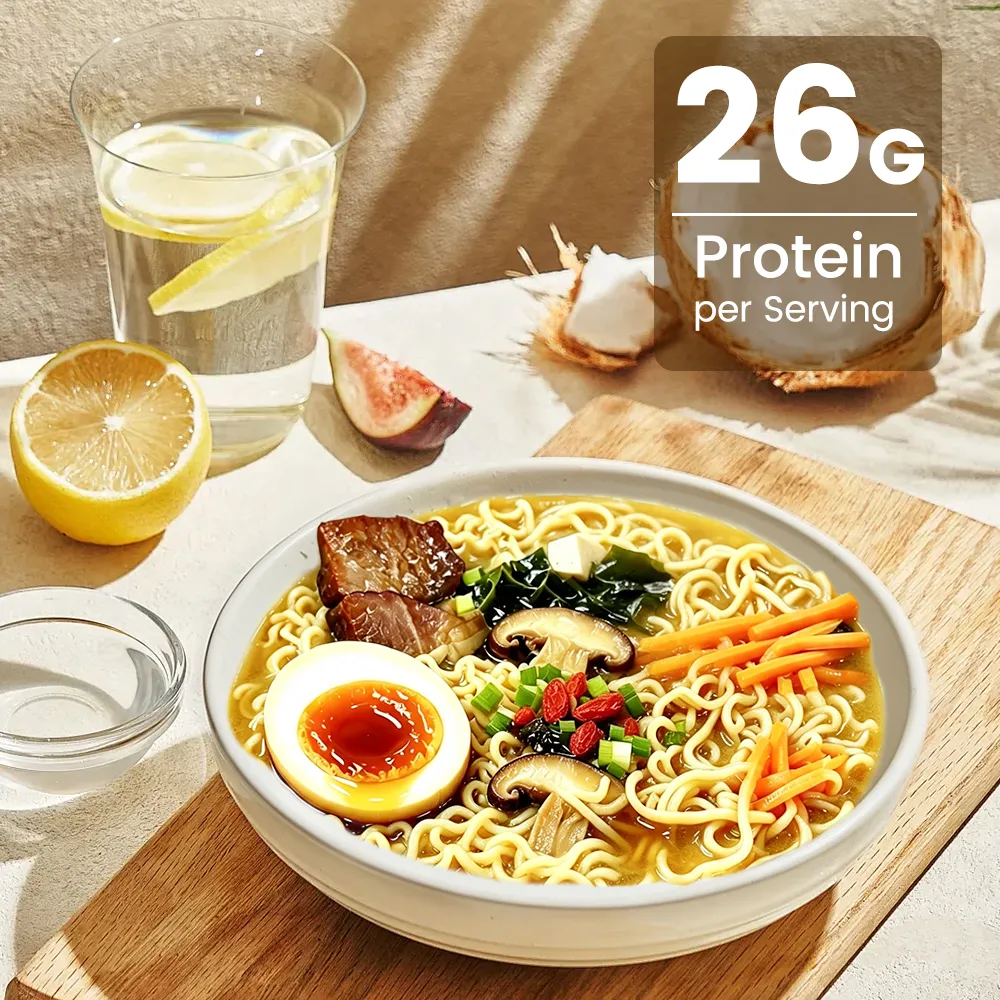
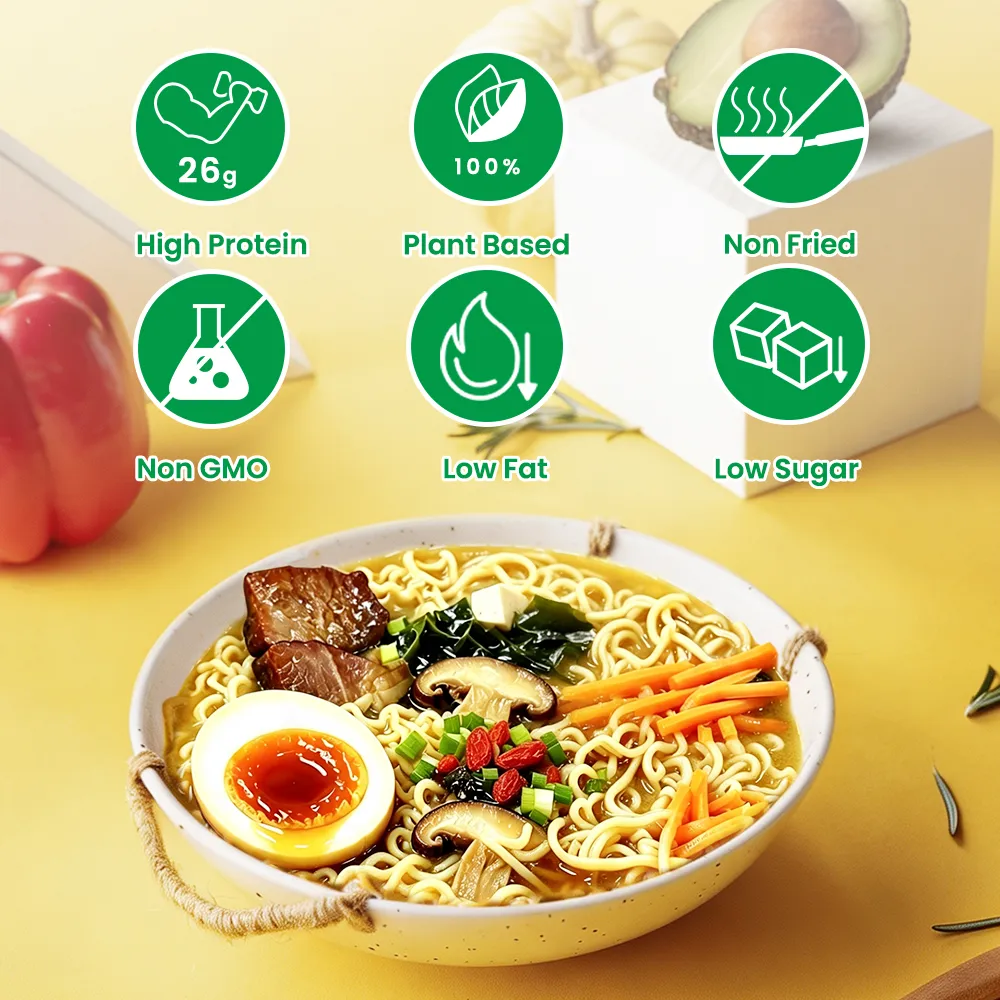
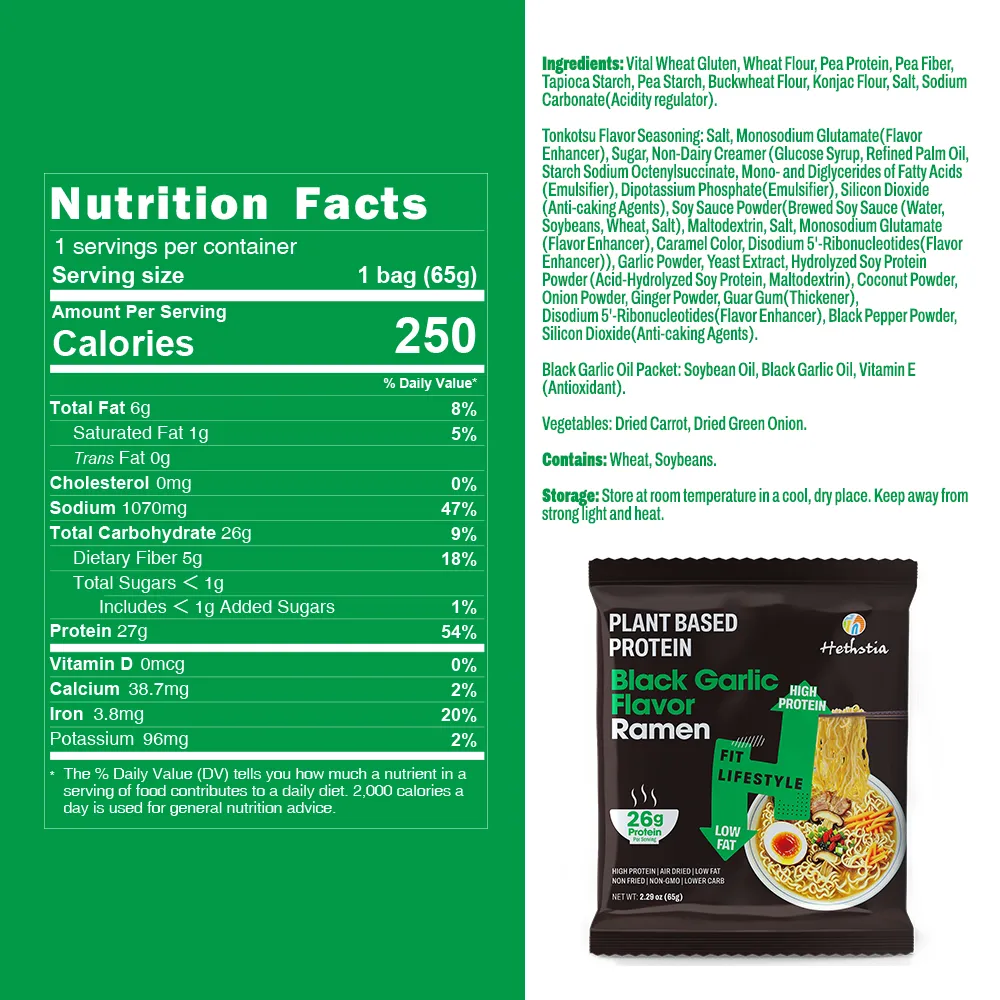
Plant-Based Protein-Packed Ramen Black Garlic Flavor with wheat and pea protein, air-dried noodles, 26g protein and 5g fiber per 65g serving. IFS and BRC certified production supports retail, foodservice, and private-label applications. Black garlic flavor provides a savory profile, while non-fried processing, low sugar, low fat, vegan, HALAL, and KOSHER features support varied market requirements and regional distribution programs.
Ready to Launch Your Brand?
| Specification | Details |
|---|---|
| Product Name | Plant-Based Protein-Packed Ramen, Black Garlic Flavor |
| Product Type | Plant-Based Instant Ramen |
| Serving Size | 65g |
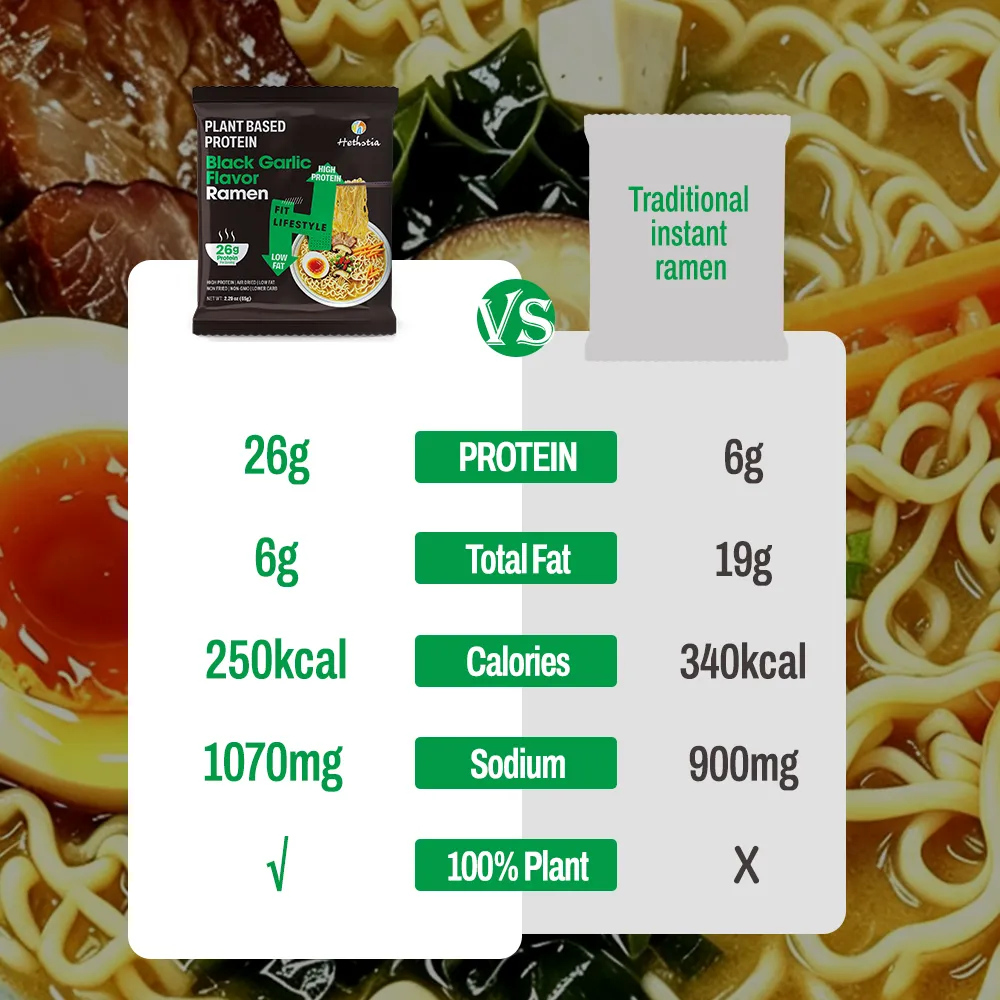
| Energy | 250 kcal |
| Protein | 26g |
| Total Fat | 6g |
| Total Carbohydrate | 26g |
| Dietary Fiber | 5g |
| Sodium | 1070mg |
| Calcium | 38.7mg |
| Iron | 3.8mg |
| Potassium | 96mg |
| Processing | Non-Fried, Air-Dried |
| Product Features | Plant-based, Vegan, Low Sugar, Low Fat, Non-GMO |
| Certifications | IFS Higher Level, BRC Grade A+, KOSHER, HALAL, HACCP |
| Allergens | Wheat, Soybeans |
Retail and foodservice buyers need instant meals that combine protein density, plant-based positioning, and familiar ramen preparation. Plant-Based Protein-Packed Ramen delivers 26g of protein and 5g of dietary fiber in a 65g serving, using wheat gluten, pea protein, pea fiber, and air-dried noodles. The black garlic flavor profile is designed for convenient meal programs, private-label ranges, and consumers seeking a protein-focused vegetarian ramen option.
What Makes This Plant-Based Protein-Packed Ramen Different from Standard Instant Ramen
Plant-Based Protein-Packed Ramen is formulated around a higher protein content than conventional instant noodle products. Each 65g serving provides 26g of protein, along with 5g of dietary fiber. The noodle base combines vital wheat gluten, pea protein, pea fiber, wheat flour, pea starch, tapioca starch, buckwheat flour, and konjac flour.
The tonkotsu flavor seasoning combines salt, monosodium glutamate(flavor enhancer), sugar, non-dairy creamer (glucose syrup, refined palm oil, starch sodium octenylsuccinate, mono and diglycerides of fatty acids(emulsifier) dipotassium phosphate(emulsifier), silicon dioxide(anti-caking agents), soy sauce powder(brewed soy sauce (water, soybeans, wheat, salt), maltodextrin, salt, monosodium glutamate(flavor enhancer), caramelcolor, disodium 5′-ribonucleotides(flavor enhancer)), garlic powder, yeast extract, hydrolyzed soy protein powder (acid-hydrolyzed soy protein, maltodextrin), coconut powder, onion powder, ginger powder, guar gum(thickener), disodium 5′-ribonucleotides(flavor enhancer), black pepper powder, silicon dioxide(anti-caking agents)
The noodles are air-dried rather than fried. This processing approach supports the product’s non-fried positioning and provides a format suited to shelf-stable instant meal applications. For buyers developing vegetarian, vegan, or protein-focused food ranges, the formulation combines familiar ramen preparation with a plant-based protein profile.
The product also carries IFS Higher Level, BRC Grade A+, HALAL, KOSHER, and HACCP certifications according to the supplied product specification. IFS Food evaluates food products and production processes against food safety, authenticity, quality, legal requirements, and customer specifications, while BRCGS Food Safety addresses product safety, integrity, legality, quality, and operational controls in food manufacturing.
For buyers evaluating a new protein-focused noodle range, Plant-Based Protein-Packed Ramen provides a defined nutritional specification that can be reviewed alongside packaging, labeling, and certification documentation.
Plant-Based Protein-Packed Ramen Construction for Instant Meal Preparation
Plant-Based Protein-Packed Ramen uses a dry noodle formulation built around vital wheat gluten and pea protein. Pea fiber contributes to the dietary fiber content, while tapioca starch, pea starch, buckwheat flour, konjac flour, and wheat flour contribute to the noodle structure.
The seasoning is formulated as a tonkotsu-style flavor profile with garlic powder, soy sauce powder, yeast extract, onion powder, ginger powder, black pepper powder, and coconut powder.
The product name identifies the finished flavor as black garlic, while the supplied ingredient specification lists garlic powder and other savory seasoning components.
The dry, air-dried format supports ambient storage and straightforward inventory handling. The recommended storage condition is room temperature in a cool, dry location, protected from strong light and heat.
The formulation contains wheat and soybeans, so buyers should incorporate these allergens into regional label reviews. For U.S. packaged foods, FDA guidance requires major food allergens to be identified on the label, including wheat and soybeans.
IFS and BRC Requirements Plant-Based Protein-Packed Ramen Procurement Teams Verify
Plant-Based Protein-Packed Ramen is supplied with IFS Higher Level and BRC Grade A+ certifications, alongside HALAL and HACCP certifications listed in the supplied specification. These credentials can support supplier qualification for retail, foodservice, and private-label purchasing programs.
IFS Food assesses food production processes against legal requirements and customer specifications, with attention to food safety, authenticity, and product quality. BRCGS Food Safety provides a framework covering product safety, integrity, legality, quality, and operational controls for food manufacturing, processing, and packing. BRCGS also states that its Food Safety standard is GFSI-benchmarked and accepted by major brands and retailers.
For procurement review, buyers should request current certification copies, certification scope, product specifications, allergen declarations, ingredient documentation, nutrition data, and relevant test reports. For products entering the U.S. market, allergen labeling should be reviewed against FDA requirements.
European-market packaging should likewise be reviewed for applicable local food information and allergen declaration requirements. Plant-Based Protein-Packed Ramen can therefore be evaluated through both product-level specifications and manufacturing-site documentation, rather than relying only on nutritional claims.
Plant-Based Protein-Packed Ramen Preparation: Five-Minute Format
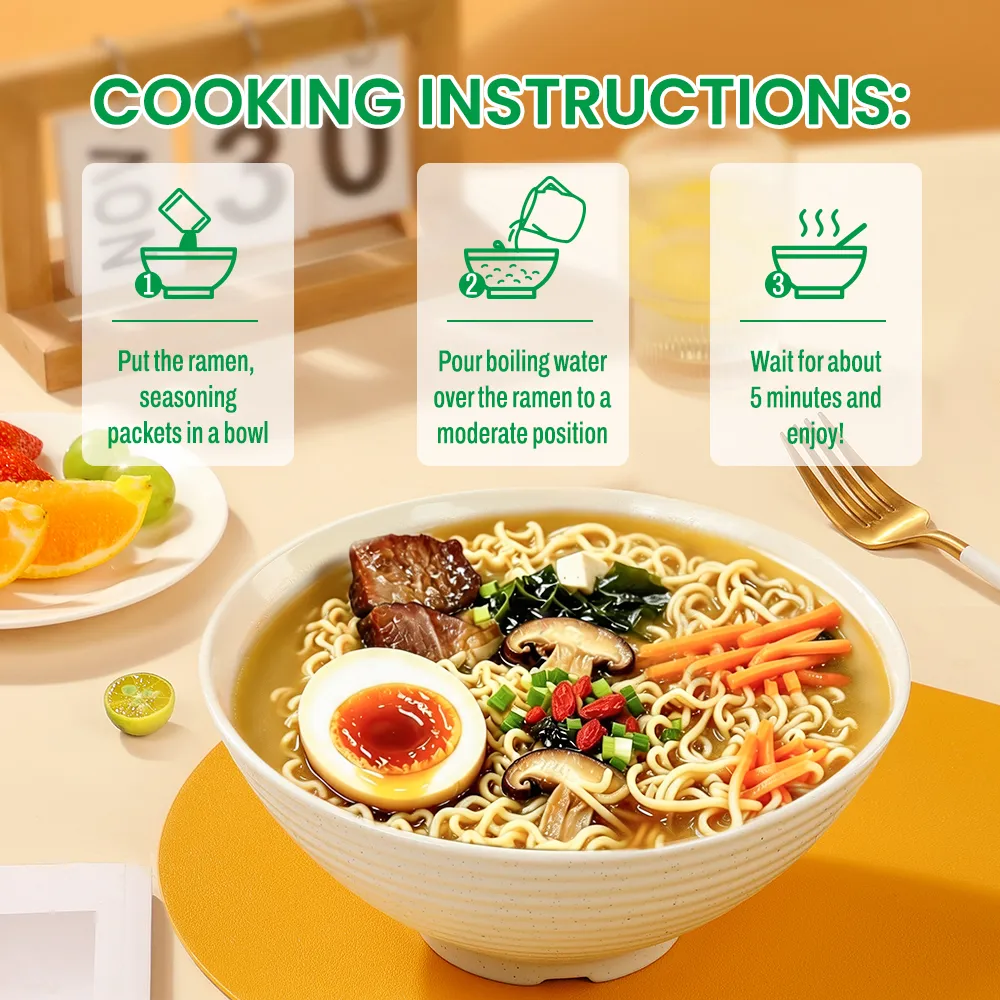
Plant-Based Protein-Packed Ramen requires no complex equipment or production-line integration at the consumer level. The supplied cooking method uses a bowl-based preparation process, which supports convenience retail, office meal programs, foodservice, and home-consumption formats.
The basic preparation process is:
- Put the ramen and seasoning packets into a bowl.
- Pour boiling water over the ramen to a moderate level.
- Allow the noodles to stand for approximately five minutes.
- Serve after the noodles have hydrated and the seasoning has been incorporated.
For commercial buyers, the preparation method can support positioning as a quick-service meal or convenient pantry product. Retailers can also package the product within plant-based instant meal assortments, protein-focused food ranges, or vegetarian convenience-food categories.
From an operational perspective, buyers should confirm final packaging configuration, case dimensions, shelf-life requirements, carton quantities, labeling format, and market-specific preparation instructions before commercial production. These details are not included in the supplied product specification and should be confirmed during quotation and specification approval.
Product Application and Supply Information
| Application Area | Buyer Use |
| Supermarkets | Plant-based and high-protein instant meal ranges |
| Private Label | Retailer-branded ramen and functional meal programs |
| Convenience Stores | Quick-preparation ambient meal products |
| E-Commerce | Protein-focused and vegan food assortments |
| Foodservice | Convenient vegetarian meal options |
| Specialty Retail | Health-focused and plant-based product categories |
| Fitness Nutrition | Protein-oriented convenience meals |
Buyers evaluating a plant-based instant meal line need consistent nutrition data, clear allergen information, recognized food-safety certification, and a preparation format that works across retail channels. Plant-Based Protein-Packed Ramen brings these product specifications together in a 65g black garlic flavor format. For commercial inquiries, product specifications, samples, packaging options, and private-label requirements can be discussed through [email protected]
Related products
-
High Protein Noodles
High Protein Low Carb Ramen Teriyaki Beef Flavor, Protein For Ramen
Send Inquiry Now -
High Protein Noodles
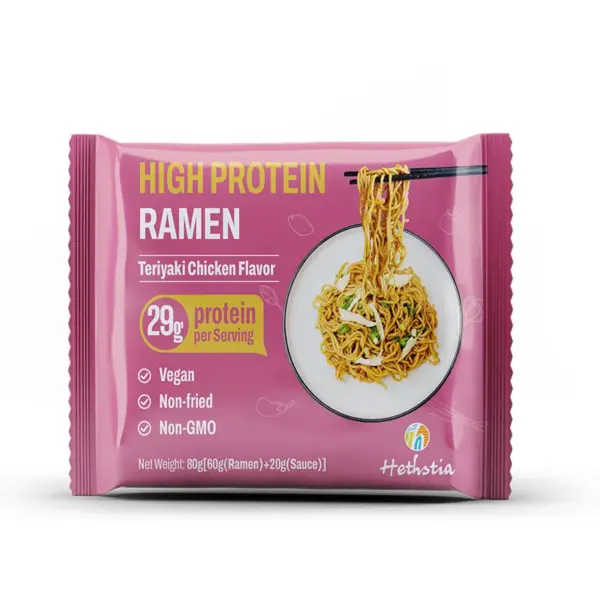
High Protein Noodles Teriyaki Chicken Flavor, 60g Ramen, 20g Sauce
Send Inquiry Now